
Share available information
Water analysis, source, target quality, capacity and country. If a report is unavailable, start with the project and identify the measurements needed.
TESTING & VALIDATION
From materials and real water samples to continuous operation, understand what each stage can establish and how it informs the next decision.
BEFORE PHYSICAL TESTING
Water analysis, source, target quality, capacity and country. If a report is unavailable, start with the project and identify the measurements needed.
Use the data to discuss candidate technologies, missing parameters and a suitable evaluation scope. An analysis report is an input to selection, not proof of membrane performance.
Depending on the project, discuss additional analysis by a suitable local laboratory, agreed sample testing or a pilot using actual feedwater. Locations and responsibilities are agreed for each project.
AVAILABLE MATERIALS
This summarises the materials currently available, rather than the company’s actual testing progress.
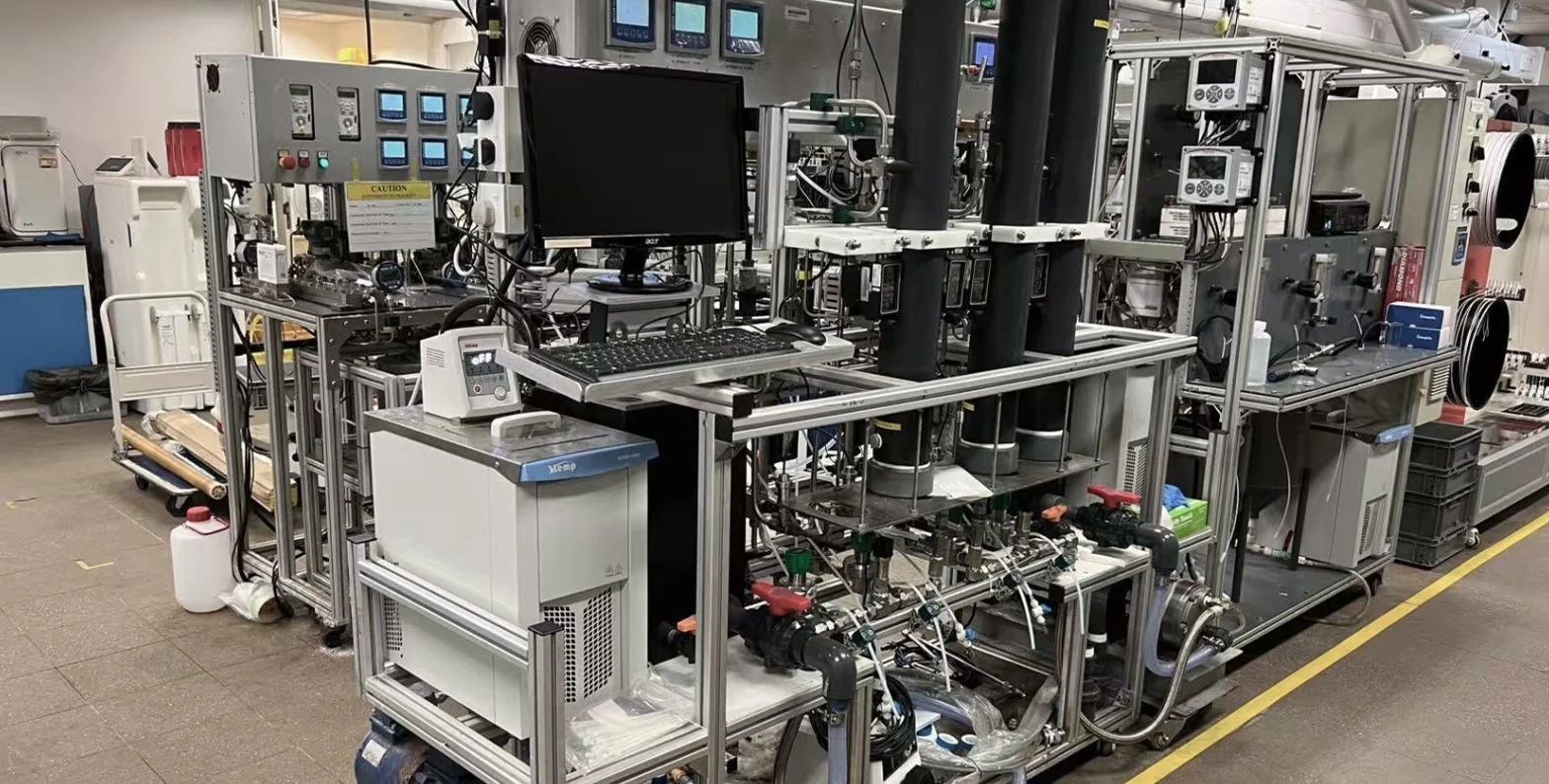
Module specifications, structure illustrations, testing equipment photographs and the original technical brochure support initial product review.
View product resourcesThe current package does not include complete sample-test, continuous-pilot or commercial operating reports. These can be added by validation stage.
What should a report include?A PROPOSED VALIDATION PATH
Suggested pathway · Agree the stages and scope for each project.
Identify the test specimen and method. Record medium, concentration, temperature, pressure and other conditions.
Assess separation, fouling trends and further information needs around the sample and target components.
Continuously record feed variations, operation, cleaning and abnormal events against agreed evaluation objectives.
Track loads, treatment results and maintenance within a defined engineering project.
TRACEABLE RECORDS
Keep enough context to interpret, review and use results for the next decision.
READING THE EVIDENCE
Start with an existing water analysis or describe your project. Agree the next step before arranging any sample shipment.